
Imagine a world where your home not only keeps you cozy but also saves you money while doing it. Sounds like a dream, right? Welcome to the realm of smart home energy, where technology meets efficiency in a dance that even your grandma would approve of. With smart devices at your fingertips, managing energy consumption becomes as easy as pie—unless you’re baking, in which case, maybe not.
Overview of Smart Home Energy
Smart home energy focuses on integrating advanced technology into residential energy management. Devices such as smart thermostats, energy monitoring systems, and automated lighting make it possible to optimize energy use efficiently. These technologies respond to human behavior and environmental changes, ensuring energy consumption aligns with actual needs.
Homeowners benefit from real-time data on energy usage through smart meters. This data aids in identifying peak usage times, allowing users to adjust their consumption habits accordingly. Notably, using automation, systems can power down or reduce energy consumption when occupants are away.
Smart appliances contribute significantly to energy savings. For example, smart refrigerators and washing machines can schedule operations during off-peak hours, minimizing electricity costs. Additionally, solar panel integration with smart home systems enhances overall sustainability by allowing households to generate and utilize their power.
Communicating through mobile applications provides users with seamless monitoring and management capabilities. They can receive alerts about energy spikes, set preferences, and control devices remotely. This level of accessibility empowers individuals to make informed choices about their energy consumption.
Investing in smart home energy solutions leads to long-term savings. The combination of reduced energy waste and lower utility bills creates financial advantages over time. Adopting this technology also contributes to environmental sustainability, helping to reduce overall carbon footprints.
Benefits of Smart Home Energy
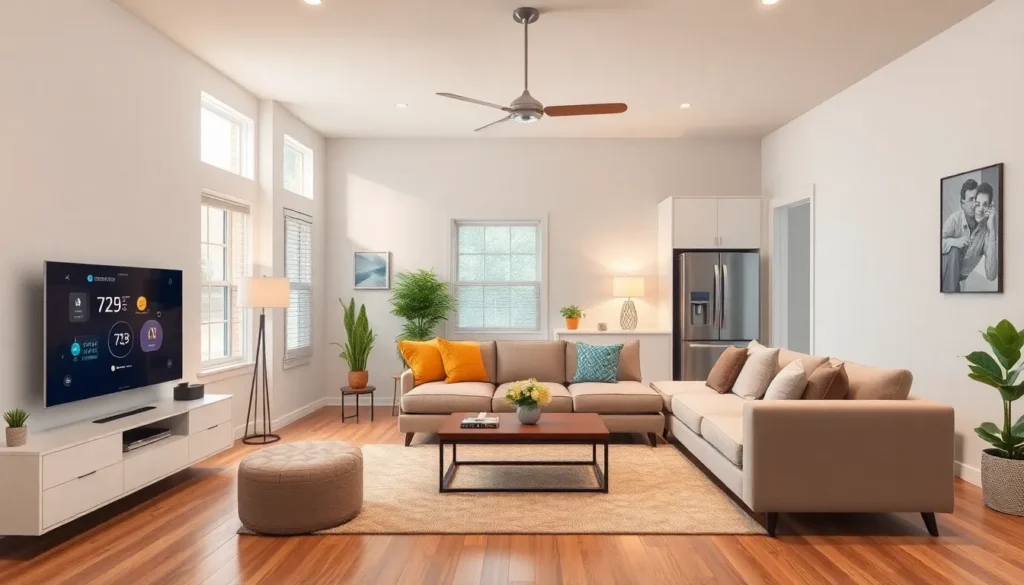
Smart home energy systems offer significant advantages in managing energy usage. Homeowners can experience improved energy efficiency and cost savings by implementing these advanced technologies.
Energy Efficiency
Smart home devices increase energy efficiency through real-time monitoring and analytics. Optimized heating and cooling systems adjust based on occupancy patterns, ensuring minimal energy waste. Automated lighting systems respond to natural light levels, reducing unnecessary electricity use. Smart appliances operate during off-peak hours, minimizing strain on the electrical grid. These features create an environment that promotes sustainability while enhancing overall comfort.
Cost Savings
Smart home energy solutions lead to substantial cost savings. Users can track energy usage patterns, allowing for informed decisions about consumption habits. Reports generated by energy monitoring systems identify peak usage times, helping homeowners shift their energy-intensive activities to off-peak periods. On average, households can save 10-30% on energy bills by utilizing smart technologies effectively. Lower costs and improved management of household expenses result in significant financial benefits over time.
Key Technologies in Smart Home Energy
Smart home energy relies on various innovative technologies to enhance efficiency and reduce costs. Key systems include smart thermostats, energy monitoring systems, and smart appliances, each playing a vital role in optimizing energy use.
Smart Thermostats
Smart thermostats significantly improve heating and cooling management. These devices learn household preferences and adjust temperatures accordingly. With features like remote access, users can modify settings from anywhere, ensuring comfort and energy efficiency. Studies show that households can achieve energy savings of up to 23% annually by utilizing smart thermostats. Many models integrate with other smart home devices, creating a cohesive energy management system that optimizes overall consumption.
Energy Monitoring Systems
Energy monitoring systems offer real-time insights into home energy usage. They track consumption patterns and identify peak usage times, providing valuable data for homeowners. Users can receive alerts about unusual energy spikes, allowing adjustment of habits to avoid excessive costs. Research indicates that homes equipped with energy monitoring systems can reduce energy consumption by 10-15%. By visualizing energy data, residents can make informed choices about energy-saving practices, which further contributes to sustainability efforts.
Smart Appliances
Smart appliances streamline household tasks while promoting energy efficiency. These devices operate on schedules, allowing users to run them during off-peak hours to lower energy costs. Functions such as smart washing machines and dishwashers can automatically adjust cycles based on load size and water usage. Evidence suggests that households can save 15-30% on energy bills through the effective use of smart appliances. Integrating these devices into a smart home energy system leads to improved convenience and efficiency.
Challenges and Considerations
Smart home energy systems face several challenges that can impact their effectiveness and adoption. Initial costs create significant barriers for some homeowners.
Initial Investment
Investment in smart home technology varies widely, often ranging from a few hundred to several thousand dollars. Smart thermostats, which cost between $100 and $300, may provide high returns through energy savings. The price of energy monitoring systems can extend from $30 to $600, depending on their features. Larger installations incorporating multiple devices tend to increase upfront costs. Homeowners should consider long-term savings against initial expenses. Return on investment often materializes over time; savings of 10-30% on energy bills help offset these early costs.
Privacy and Security Concerns
Privacy and security represent notable challenges in using smart home technology. Many smart devices collect vast amounts of household data. Hackers targeting weak security systems could access personal information, making robust security measures essential. Homeowners must prioritize device security through strong passwords and regular updates. Successful implementations of smart home systems depend on ensuring data protection through encryption methods. Research indicates that 67% of consumers express concerns about data privacy, highlighting the importance of addressing these issues during adoption.
Future Trends in Smart Home Energy
Smart home energy technology continues to evolve, pushing boundaries in efficiency and convenience. Integration of artificial intelligence within smart devices enables predictive analytics, allowing systems to learn and adapt to user habits over time. For example, smart thermostats now utilize machine learning to forecast heating and cooling needs based on occupancy patterns.
Greater emphasis on renewable energy sources is becoming evident, with residential solar power systems easily integrating into smart home networks. Homeowners can manage solar panel production and energy consumption simultaneously, maximizing usage and minimizing waste. This shift promotes sustainability alongside energy autonomy.
In addition, energy storage solutions are gaining traction. Home batteries allow homeowners to store excess energy generated during peak sun hours for use during high demand periods. This capability optimizes energy use and enhances reliability by reducing dependence on the grid.
Data privacy continues to be a pressing issue as smart home technology advances. The implementation of robust security protocols is essential for protecting sensitive user information. Strong encryption and regular updates are necessary to safeguard devices from cyber threats, addressing growing consumer concerns.
Moreover, interoperability among devices is advancing. Manufacturers are increasingly focusing on creating compatible systems and standardized protocols, allowing devices from different brands to communicate seamlessly. This compatibility maximizes the potential of smart home energy systems and enhances user experience.
User empowerment through mobile applications is also evolving. Enhanced applications provide comprehensive monitoring of energy usage and real-time insights, enabling informed decision-making. Simple interfaces allow homeowners to manage their smart devices effortlessly, fostering greater engagement in energy conservation efforts.
Overall, the future of smart home energy is bright, driven by technological advancements and a commitment to sustainability.
Embracing smart home energy solutions not only enhances efficiency but also promotes significant cost savings and sustainability. As technology continues to evolve homeowners can harness the power of smart devices to optimize their energy consumption. By integrating systems like smart thermostats and energy monitoring tools they gain valuable insights into their usage patterns.
While there are challenges to consider such as initial costs and data privacy concerns the long-term benefits often outweigh these hurdles. The future of smart home energy is bright with advancements in AI and renewable energy integration paving the way for even greater efficiency. Homeowners who invest in these technologies are not just saving money but also contributing to a more sustainable future.