
In a world where Mother Nature is raising her eyebrows at our building habits, eco-friendly building technology steps in like a superhero ready to save the day. Imagine constructing homes and offices that not only look good but also give the environment a warm hug. With innovations that make green living as stylish as it is sustainable, this technology is reshaping our cities and our futures.
Gone are the days of choosing between comfort and conscience. Eco-friendly building solutions blend efficiency with elegance, proving that sustainability can be both chic and practical. From solar panels that catch rays like a sunbather to materials that make recycling look like a walk in the park, the possibilities are endless. It’s time to explore how these advancements are paving the way for a greener tomorrow, one building at a time.
Overview of Eco-Friendly Building Technology
Eco-friendly building technology focuses on minimizing environmental impact while maximizing energy efficiency. This approach integrates sustainable practices into the design, construction, and operation of buildings.
Definition and Importance
Eco-friendly building technology refers to methods and materials that reduce energy consumption and decrease waste in construction. This technology plays a crucial role in addressing climate change by lowering greenhouse gas emissions. Sustainable practices improve air quality and promote health, benefiting both occupants and the planet. Recognizing these advantages, many investors and homeowners prioritize eco-friendly solutions in their building projects, contributing to a collective effort toward sustainability.
Key Components
Several key components define eco-friendly building technology. Energy-efficient materials often include insulated concrete forms and advanced glazing systems, which enhance thermal performance. Renewable energy installations, such as solar panels and wind turbines, supply clean electricity. Water conservation systems, like rainwater harvesting and graywater recycling, minimize waste. Furthermore, sustainable landscaping practices, including native plants and permeable paving, enhance biodiversity while managing stormwater. These elements collectively create buildings that are not only functional but also environmentally responsible.
Benefits of Eco-Friendly Building Technology
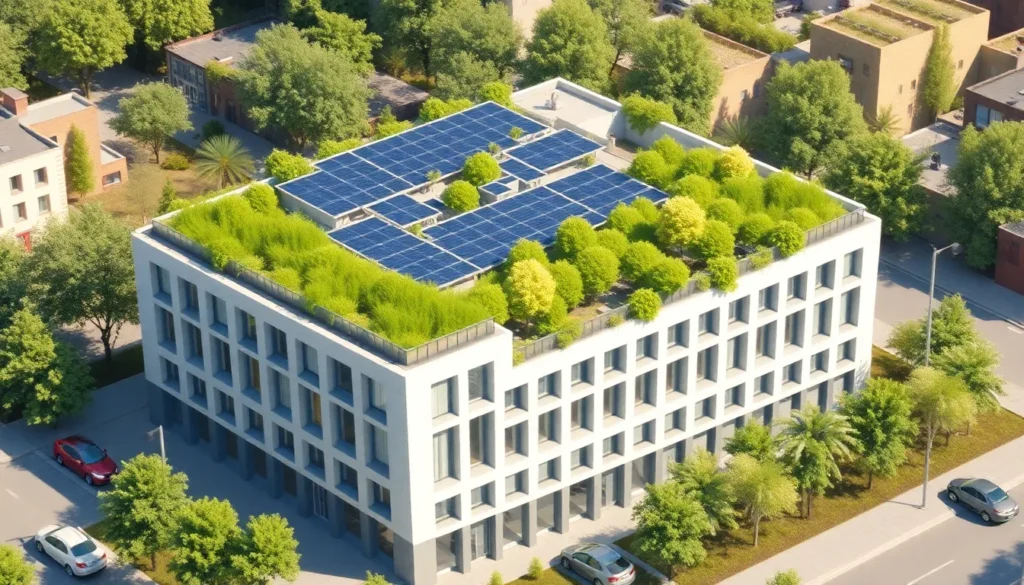
Eco-friendly building technology offers numerous advantages that benefit both the environment and the economy. These benefits highlight the importance of adopting sustainable practices in construction.
Environmental Impact
Eco-friendly building technology significantly reduces the environmental footprint of construction projects. It lowers greenhouse gas emissions by using energy-efficient materials and renewable energy systems. Sustainable technologies, such as solar panels, promote clean energy while minimizing reliance on fossil fuels. Water conservation systems, including rainwater harvesting, contribute to reduced water waste and improved resource management. Additionally, eco-friendly buildings often enhance indoor air quality through the use of non-toxic materials and better ventilation, fostering a healthier living environment.
Economic Advantages
Economic benefits accompany the transition to eco-friendly building practices. Lower energy consumption leads to reduced utility bills, creating long-term cost savings for building owners. Financial incentives, such as tax rebates and grants, often support the integration of sustainable technologies. Moreover, the demand for green buildings continues to rise, increasing property values and improving resale potential. Sustainable infrastructure fosters job creation in green industries, stimulating local economies and promoting sustainable growth. Overall, eco-friendly building technology presents a viable solution for both ecological health and economic prosperity.
Types of Eco-Friendly Building Technologies
Eco-friendly building technologies incorporate various methods and materials to advance sustainability in construction. Two key areas are sustainable materials and energy-efficient systems.
Sustainable Materials
Sustainable materials play a crucial role in eco-friendly building technology. Recycled content materials reduce waste and minimize the demand for new resources. Bamboo, a rapidly renewable resource, offers strength and flexibility, making it an excellent alternative to traditional hardwoods. Straw bales provide insulation and thermal mass, proving effective in energy-efficient designs. Low-VOC paints and finishes enhance indoor air quality by minimizing harmful emissions. Furthermore, using local materials decreases transportation impacts, lowering carbon footprints associated with shipping. Together, these choices support responsible sourcing, helping builders create structures that are not only functional but also environmentally conscious.
Energy-Efficient Systems
Energy-efficient systems contribute significantly to lowering energy consumption in buildings. Solar panels harness sunlight and convert it into electricity, reducing reliance on fossil fuels. Geothermal heating systems utilize stable ground temperatures to provide efficient climate control, cutting energy use dramatically. Insulation systems designed for optimal thermal performance minimize heat loss, ensuring consistent indoor temperatures year-round. Smart technology, like programmable thermostats, allows for precise energy management, further reducing waste. Incorporating these systems not only enhances building efficiency but also lowers utility costs, providing economic benefits alongside environmental benefits.
Challenges and Limitations
Eco-friendly building technology faces various challenges and limitations that impact its widespread adoption. Understanding these obstacles reveals the complexity of transitioning to sustainable practices.
Cost Considerations
High upfront costs often deter builders from choosing eco-friendly options. Initial investments in sustainable materials and energy-efficient systems can exceed traditional construction expenses. Long-term savings may offset these costs, but immediate financial barriers remain. Price fluctuations for renewable energy installations also complicate budgeting. Furthermore, limited access to affordable financing options constrains project viability. Many developers hesitate to commit to eco-friendly solutions without guaranteed returns on investment, creating a gap in adoption rates.
Regulatory Hurdles
Obtaining permits for eco-friendly projects often presents significant hurdles. Local regulations may not support sustainable practices, leading to delays and additional costs. Building codes frequently lag behind technological advancements, making compliance challenging. Navigating differing standards across regions complicates large-scale implementation. Furthermore, achieving certifications for green building can become a time-consuming process. Stakeholders sometimes face resistance from local authorities who prioritize conventional methods over innovative approaches.
Future Trends in Eco-Friendly Building Technology
Innovations in eco-friendly building technology continue to reshape the construction landscape. Emerging practices focus on enhancing sustainability and efficiency, pushing the boundaries of traditional methods.
Innovations on the Horizon
Smart materials are set to revolutionize building design. These materials respond to environmental changes, optimizing energy usage. For instance, phase-changing materials can regulate indoor temperatures, reducing reliance on heating or cooling systems. Advancements in building-integrated photovoltaics enable solar energy generation without compromising aesthetics. Additionally, 3D printing of eco-friendly materials presents a unique opportunity for sustainable construction, allowing for customized designs that minimize material waste.
Increased Adoption Rates
Public interest in eco-friendly construction has surged over the past few years. A growing number of developers embrace sustainable practices as consumers demand greener solutions. Educational initiatives raise awareness about the benefits of eco-friendly technologies, encouraging builders to invest in them. Furthermore, government incentives and rebates for renewable energy installations stimulate market growth. Data suggests that properties employing eco-friendly technologies enjoy higher resale values, making them attractive investments. As these patterns continue, adoption rates are likely to rise, paving the way for a more sustainable future in construction.
Eco-friendly building technology represents a significant shift in the construction industry. By prioritizing sustainability and efficiency, these innovations not only address pressing environmental issues but also enhance the aesthetic and functional aspects of buildings. As the demand for greener solutions grows, the integration of renewable energy systems and sustainable materials becomes increasingly vital.
While challenges remain in terms of costs and regulations, ongoing advancements and public interest are driving a transformation toward more sustainable practices. Embracing eco-friendly building technology is essential for creating a healthier planet and fostering economic growth. The future of construction lies in these responsible choices, paving the way for a greener and more sustainable urban environment.